
Outlier Void MTB Pedals Review: Single Vs. Dual Sided?
Hello AstonMTBers!
It’s pedal time again. After falling in love with the Outlier Pendulum this year (still my daily pedal on most bikes), Outlier had also launched the Void pedal at the same time as their new brand. The Void is a more traditional dual-sided version of the single-sided Pendulum, which initially I wasn’t interested in testing, but after the success with the Pendulum, I thought I should try it.
Most of the construction is the same: 7075 alloy, huge radial bearings for the “axle-less” design that gives unlimited concavity and aggro threaded pins. I’ve been riding both pedals back-to-back to find my preference and to answer the question loads of you keep asking: “Have you tried the Void yet and what do you think?”
The price of both pedals is $299 CAD, the Void is slightly heavier at 404g due to the extra pins and a little more material than the 378g Pendulum.
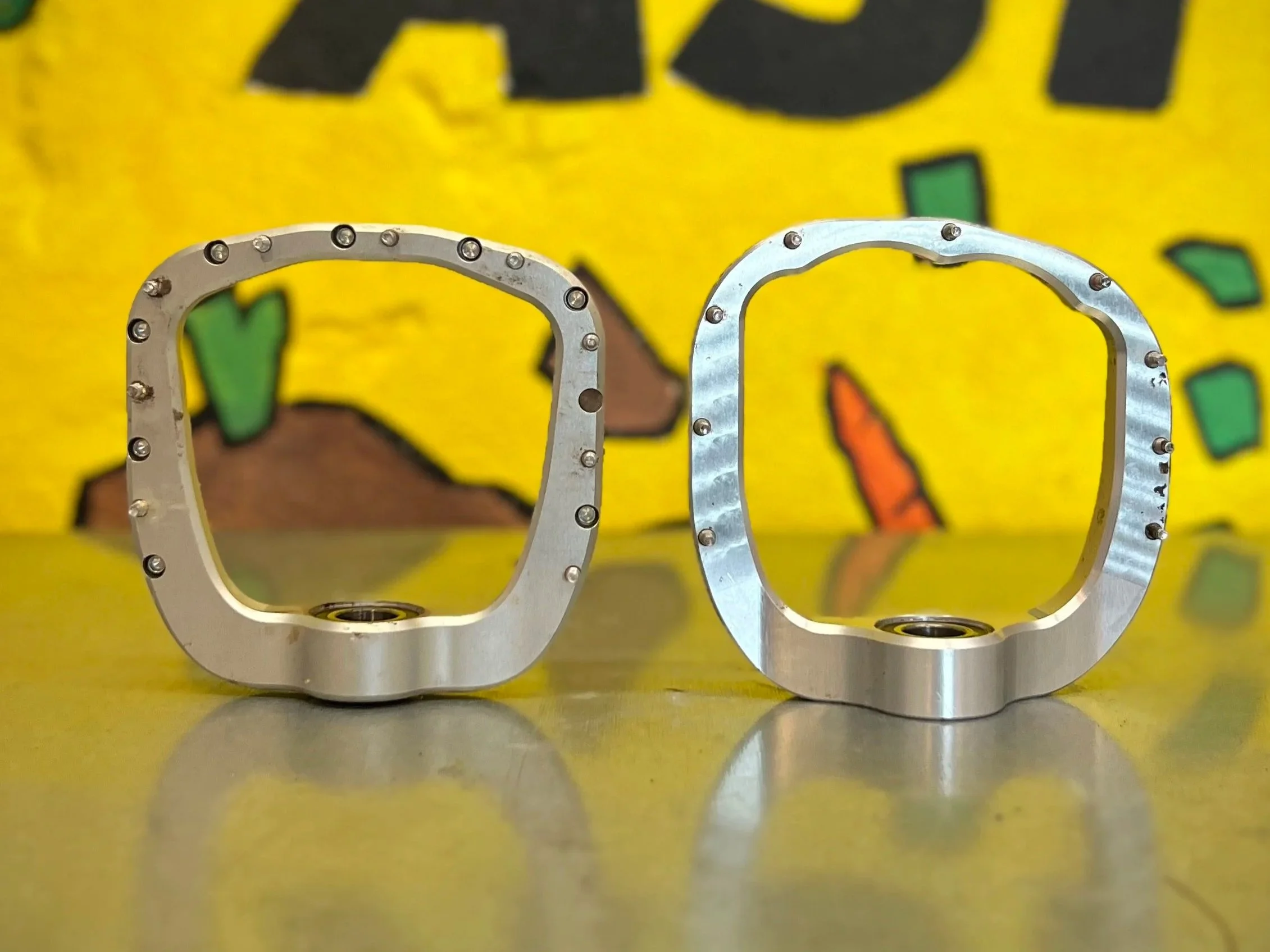
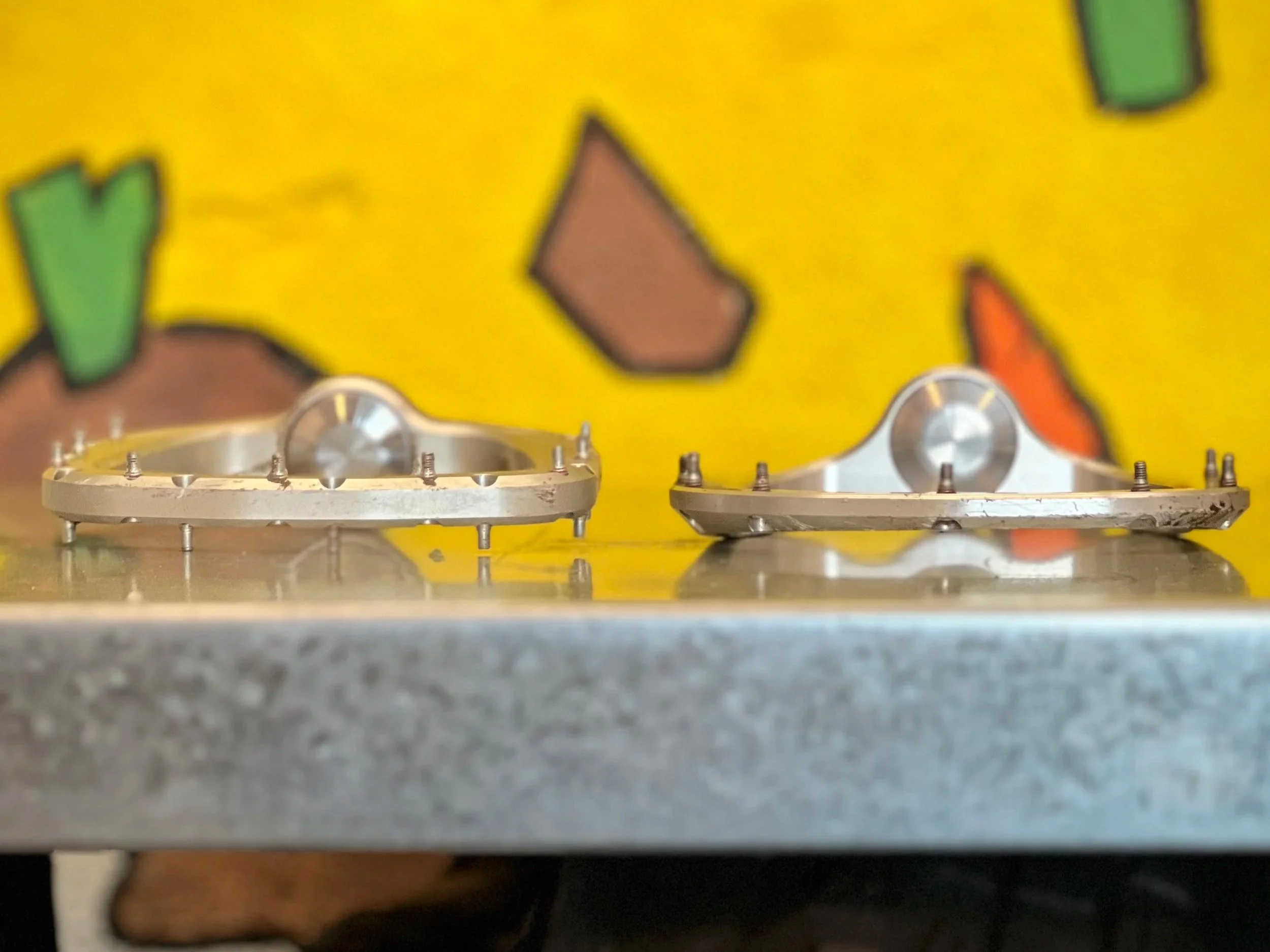
Void on the left and Pendulum on the right. What would you choose?
Grip
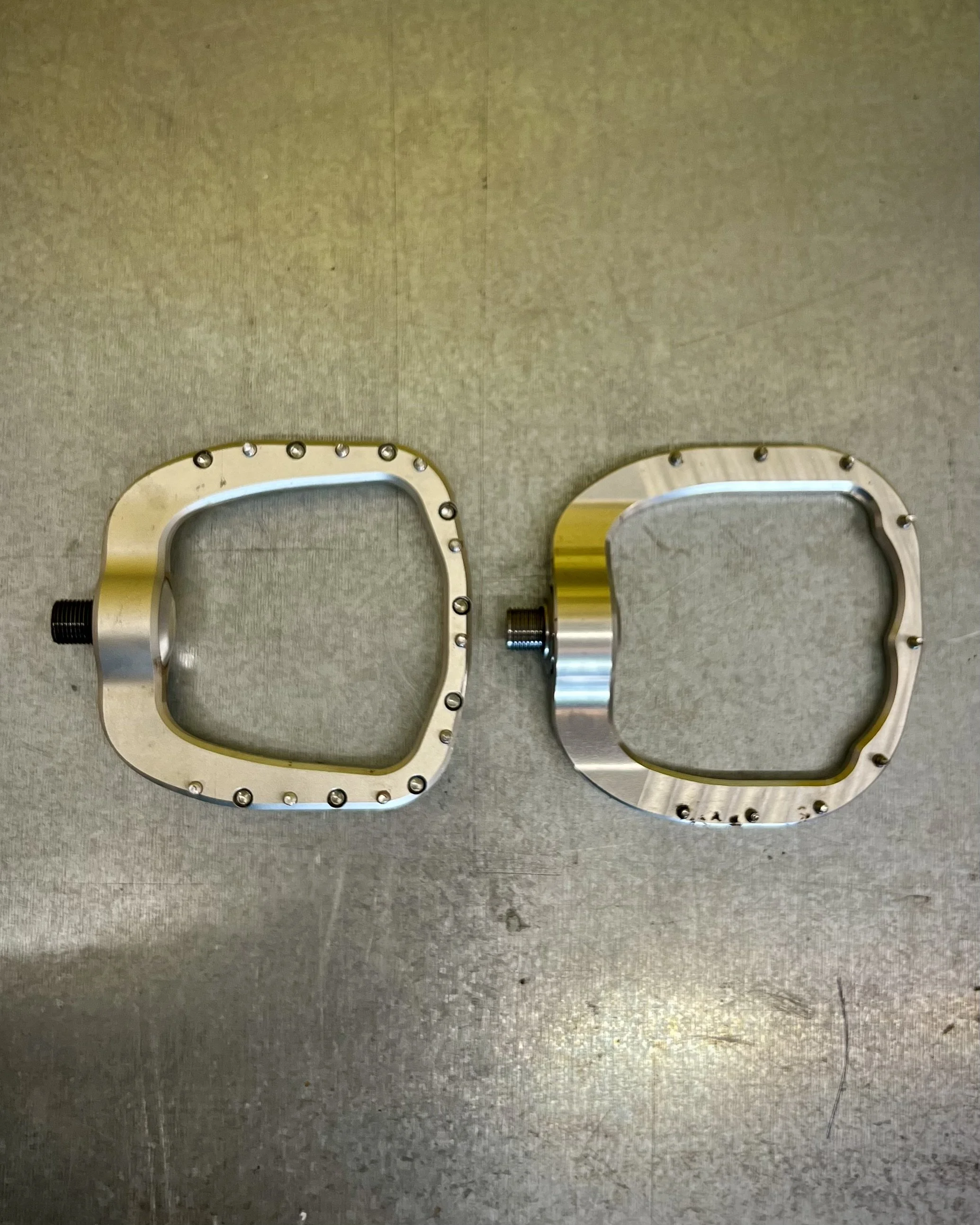
Outlier specs the same savage threaded pins on both designs, the threaded pins grip the sole of your shoe more than a smooth pin. There are 9 pins per side on each platform and the mechanical grip is seemingly identical. Both offer a massive platform that is probably the second biggest on the market after the Pedaling Innovations Catalyst - my previous favourite pedal. The Pendulum has a touch more real estate on the front-outer edges which helps with the larger front portion of your shoe.
The axle-less design essentially offers an unlimited concave as your sole presses right through the middle: the heavier you are the more grip you will create.
Stability
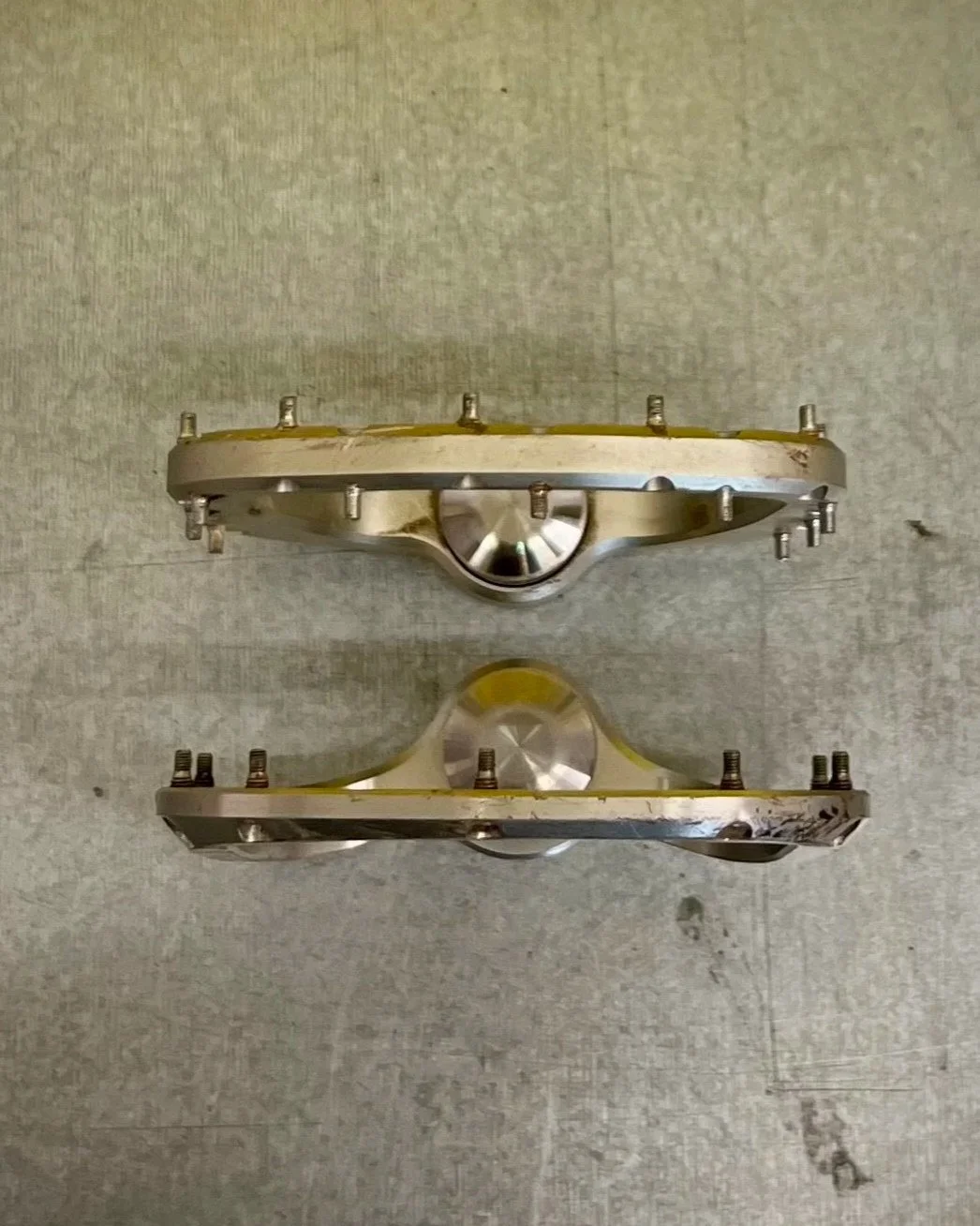
The Pendulum gives way more stability in rough terrain and a more confident overall feel thanks to that low underslung position – your foot feels better connected to the bike and there is never the sensation of rolling forwards over the front of the pedal.
Durability
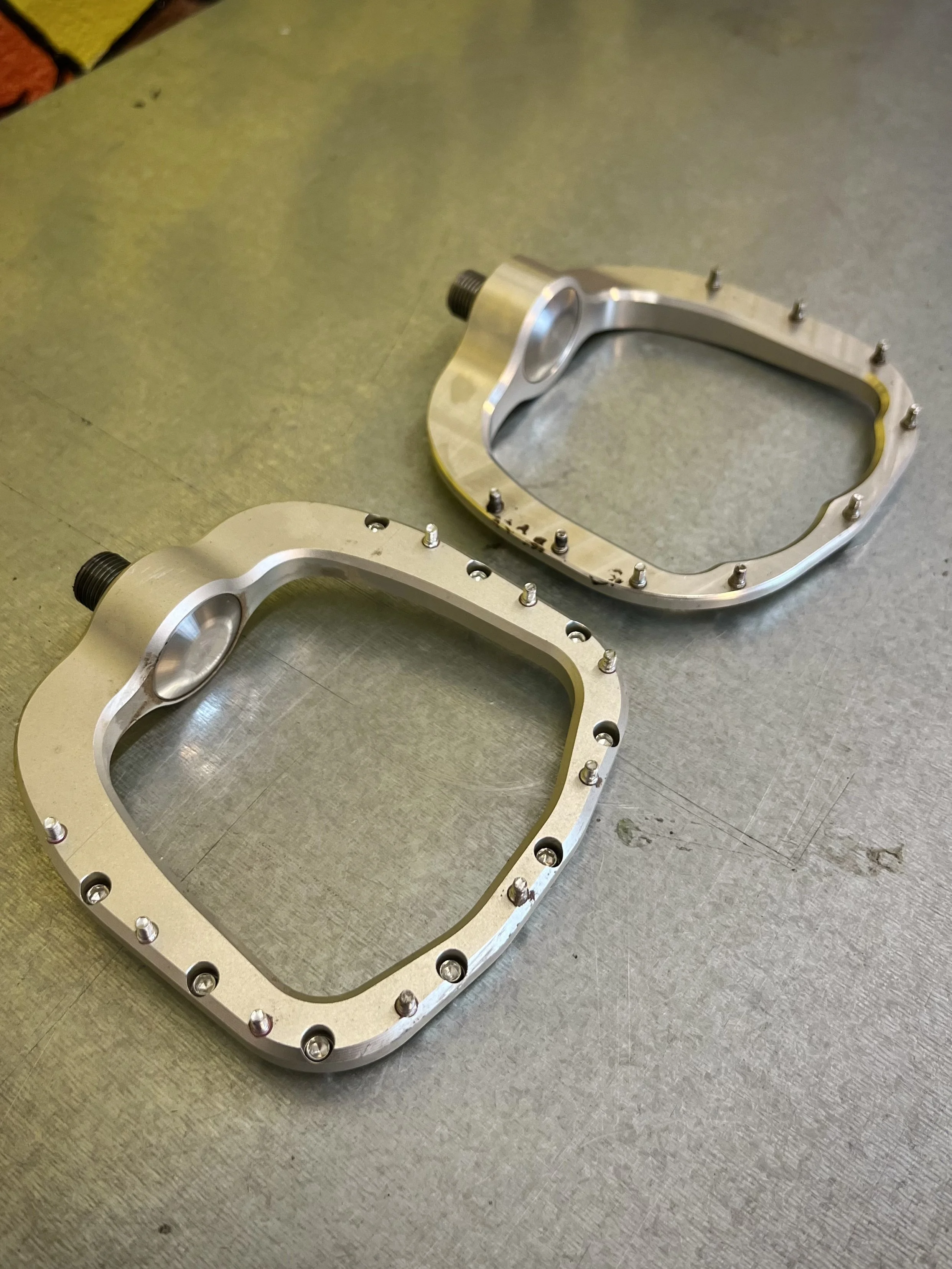
On both pedals, the pins screw in from the back so damaged ones can be removed easily if needed. It’s nearly impossible to damage a pin on the Pendulum as it is unlikely to ever hit anything with your weight behind it. On the Void, pin damage will be a long term issue as with all flats.
Bearings on both smooth as butter after months of abuse. No play. Threaded pins perfect. The Void has eaten some rock strikes with no bending or cracking, nothing as bad as the crank bending situation on the Pendulum’s which shrugged off the impact with ease.
I really like the axle design used on both pedals. The huge bearings should outlast the tiny bearing and/or bushings found in normal pedals, plus they are easy to change and don’t require any specific tools other than a small drift to remove bearings and a vice to press them in.
Single or Double Sided?
Not everybody online seemed to like these single-sided pedals, but I think Outlier absolutely nailed it with the Pendulum: they ditched the traditional axle position and hung the platform below it, flipping the usual +8mm-ish ride height into -7mm from axle centre to the foots platform. The result is stupid stability in the rough – glueing you to the bike.
Downsides? Slightly less ground clearance and the chance of putting your foot on the wrong side mid-ride. For me the clearance was never an issue: I prefer to have the smooth underside to glide over rocks nicely instead of pins that can dig in to rocks. For me, the wrong-side moments were rare enough that the stability gain was 100 % worth it.
If you rarely take a foot off and just want maximum planted feel and maximum DH speed and stability, the Pendulum wins. If you are a less confident rider who dabs a lot or likes to hang out a safety foot, ride super techy trials stuff, or hit dirt jumps, the Void takes it.
The Parallelogram Theory – Why Square Edges Are Still Wrong
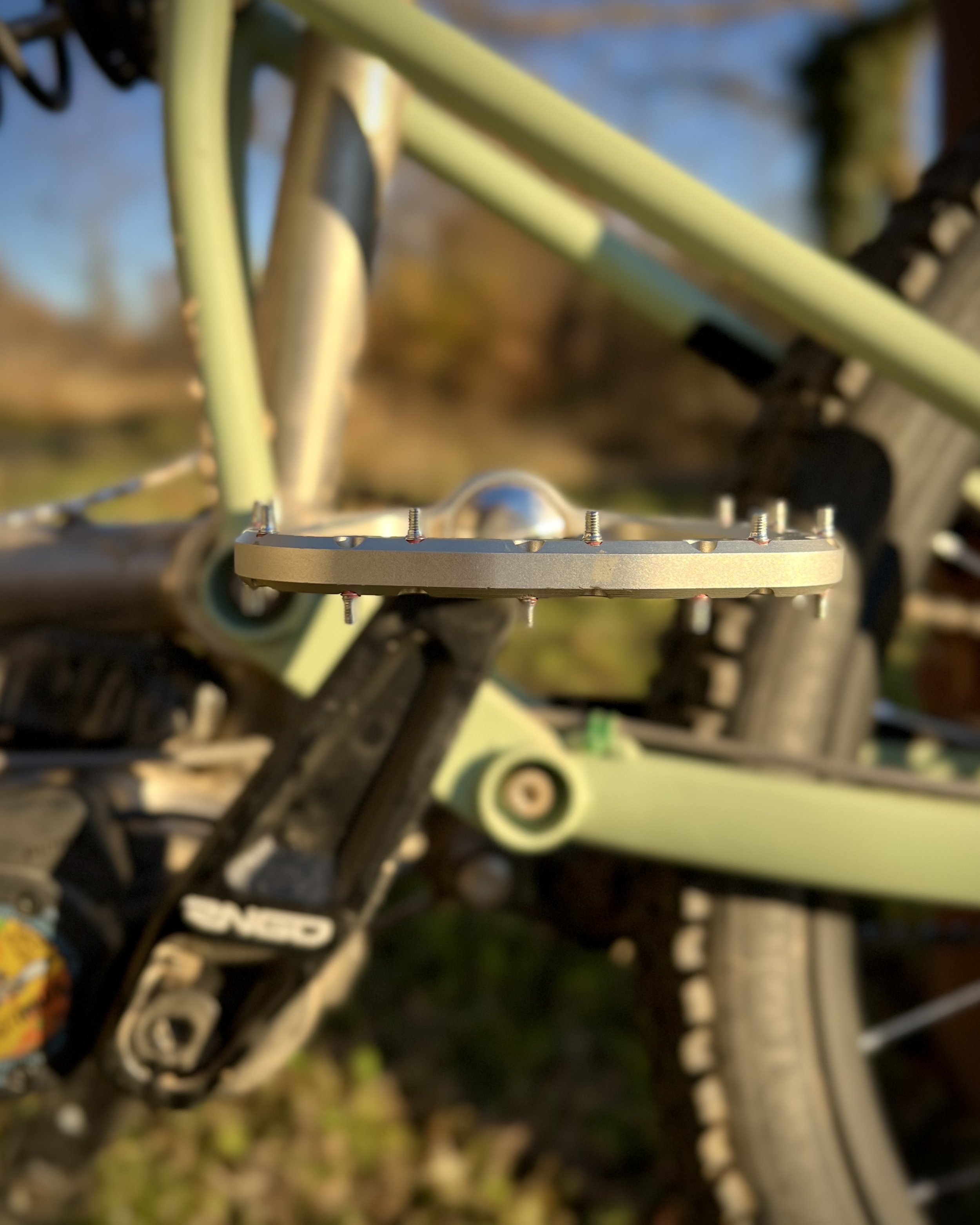
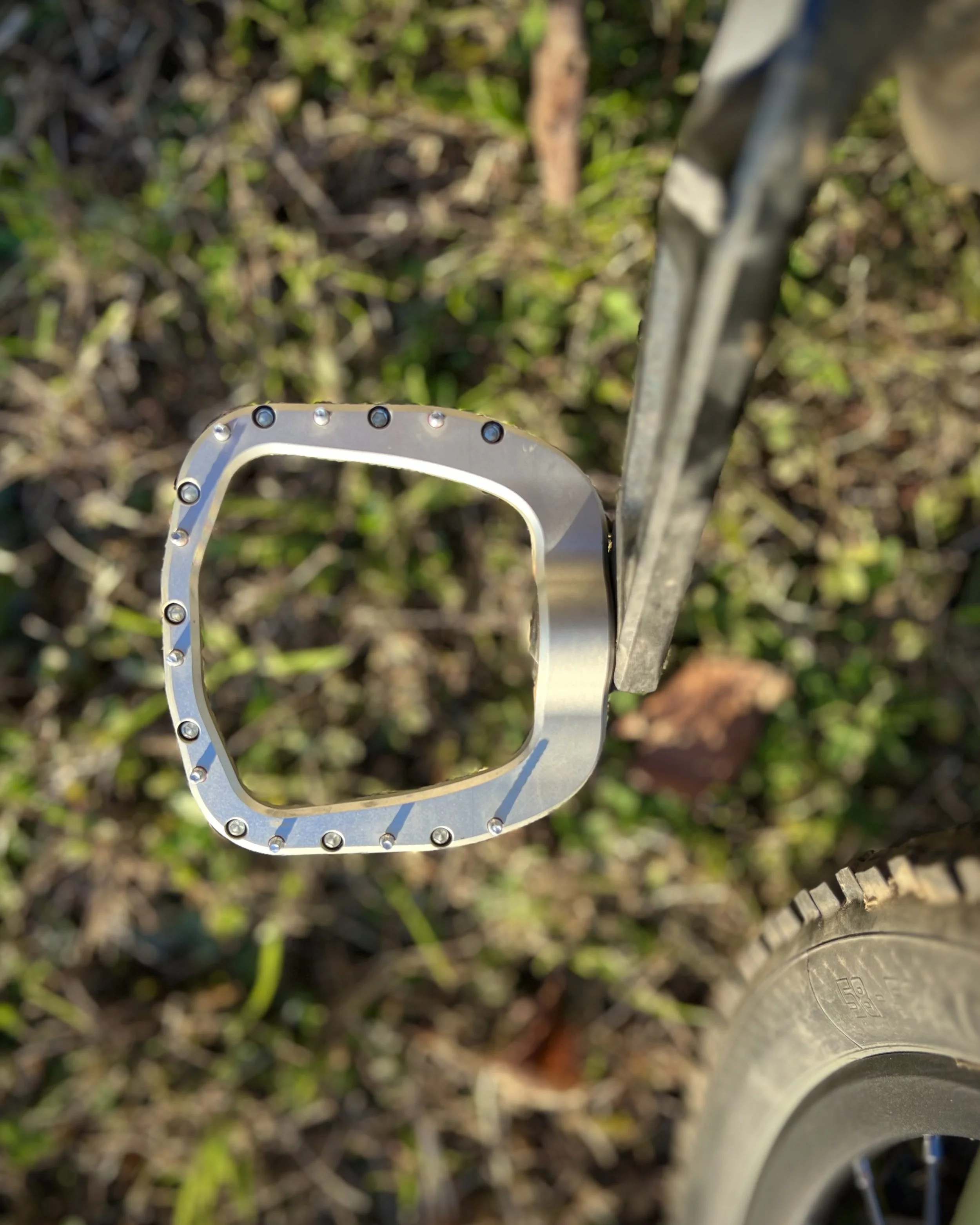
One thing I don’t like on the Void (and some other flats) is the square leading and trailing edges instead of a parallelogram shape.
Two reasons it’s wrong:
Square edges hook up on rocks instead of glancing off.
If the pedal happens to be vertical-ish when to stomp back on to the square edge, your foot can roll forwards or backwards and you end up in completely the wrong spot (or off the pedal completely).
A parallelogram design with angled leading and trailing edges rolls the pedal under your foot every time. Outlier went square on the Void – it keeps the overall platform length more compact and is probably easirer to machine, but it’s the one black mark on an otherwise brilliant pedal. Not a deal-breaker, but I’d prefer an angle there.
Verdict – Which One Wins?
If you are a rider looking for maximum DH speed, stability, confidence and you don’t take your feet off too much, the single-sided Pendulum is for you.
If you ride lower speed terrain, more tech, trials or dirt jumps, and take your feet off often, go for the Void.
My pick: the Pendulum when I’m riding enduro and 100% on the DH bike. The Void for anything else. Both pedals are excellent. Outlier are making some of, if not the best flats on the planet right now, full stop.
You can read the full (and more in-depth) Pendulum review here.
Check out my comp where you can win a pair of these Outlier Pedals and support this independent review.!
